A Parent's Guide to Happy First Letters: Alphabet Tracing Practice for Preschoolers
What Every Parent Needs to Know About Alphabet Tracing Practice
Alphabet tracing practice means following dashed or dotted letters with a pencil or crayon until the shape of each letter feels familiar to the hand and the eye. For kids ages 3 to 5 it is one of the gentlest ways to get ready for writing, because the letter is already there and your child only has to follow it.
The main kinds of tracing practice you will find:
- Pen control paths: straight, wavy and zigzag lines.
- Big single letters: one large uppercase and lowercase letter.
- Letter rows: the same letter repeated across a line.
- First words: a short word that starts with the letter.
- Trace and color books: a tracing page next to a picture.
What to weigh before you start:
- Readiness: can your child hold a crayon and copy a circle?
- Letter size: bigger is easier for little hands.
- Session length: 5 to 10 minutes beats one long sitting.
- Tools: a pencil or chunky crayon, not a marker.
- Fun factor: a picture or character to look forward to.
- Review: a way to look back at letters already learned.
By the end of this guide you will know when your child is ready, how to pick tracing pages that match their age, and how to turn a few minutes a day into a real habit that ends with a proud “I know my ABCs!”
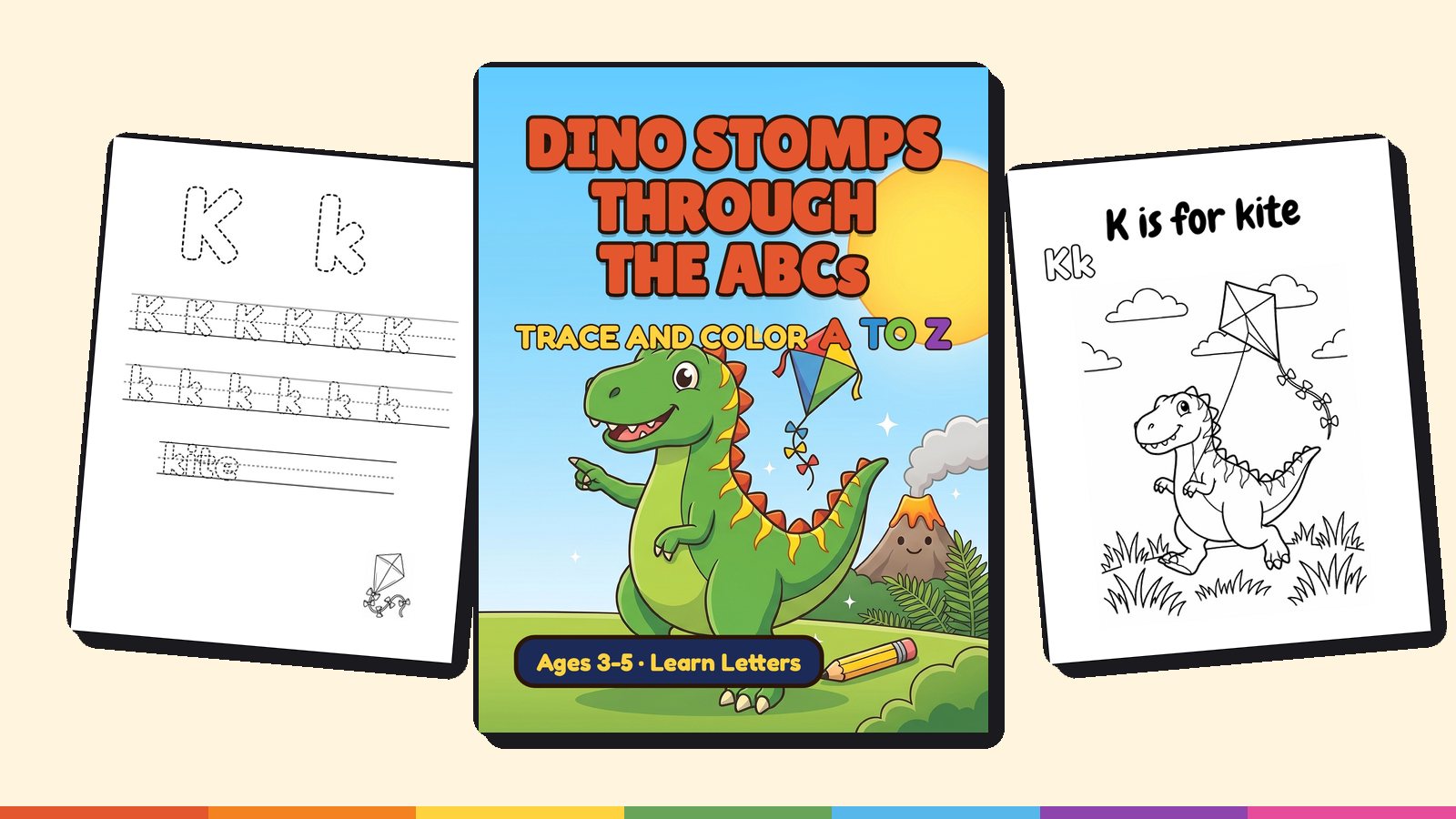
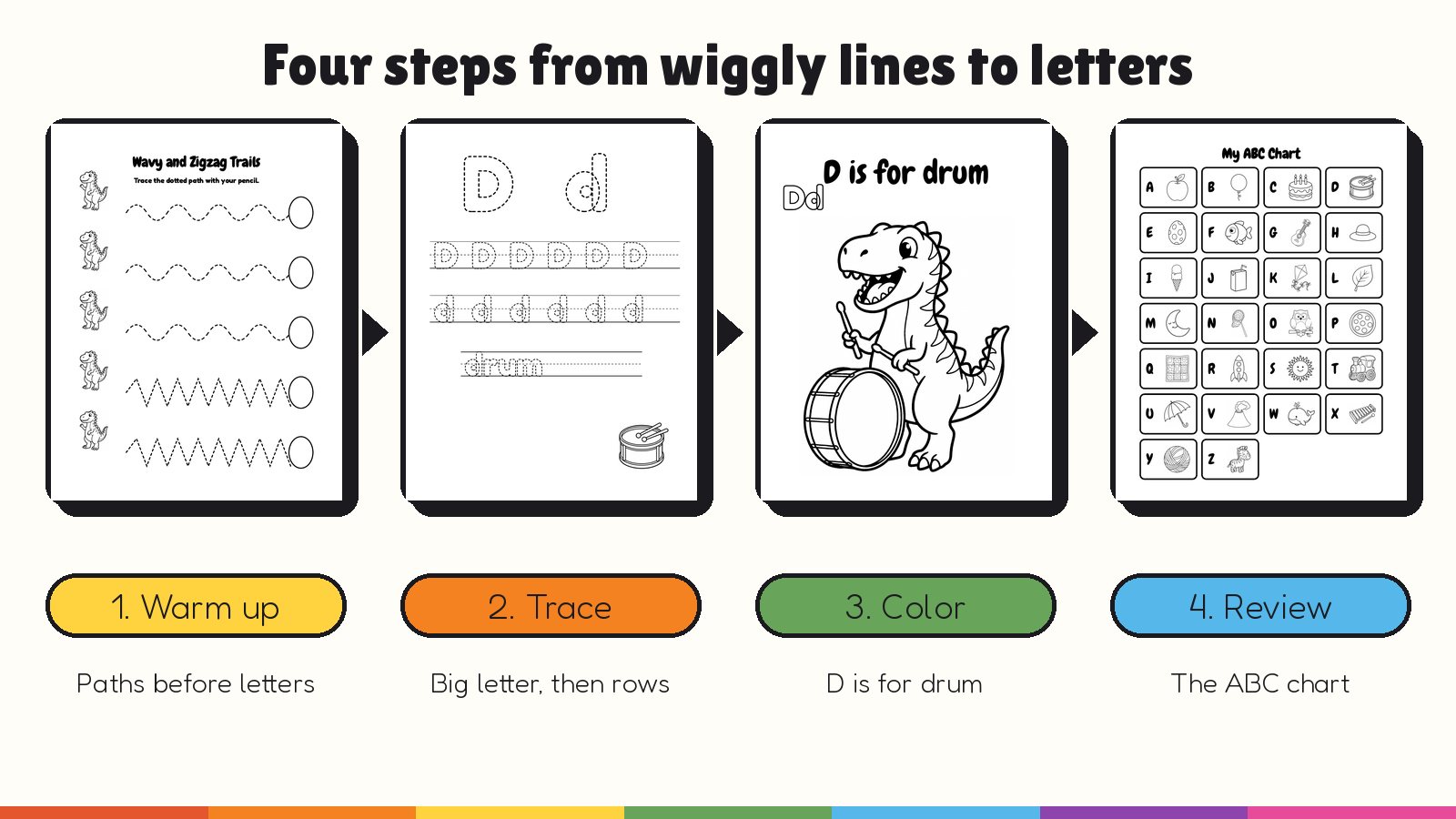
I am Pete Harper, the author behind Imagination Press and its coloring and activity books for kids, including an ABC coloring book, a spelling book and our newest, a dinosaur alphabet tracing workbook for ages 3 to 5. In this guide, I will share what we learned building that book letter by letter this fall, from the first warm-up path to the final certificate.
The Main Types of Alphabet Tracing Practice for Preschoolers
Letter tracing has been a preschool staple for a long time, but the books and printables parents can choose from in 2026 look very different from the plain worksheets many of us remember. Today you can find tracing paired with coloring pages, favorite characters, review pages and even a certificate at the end, all designed to make the practice feel like play.
Two families of pages cover almost everything a preschooler needs: the warm-ups that come before letters, and the letter pages themselves.
Pen Control Warm-Ups
Before a child can trace an A, they need to steer a pencil along a line without lifting it. Pen control pages are short paths that build exactly that skill.
What to look for:
- A clear start and finish: a little character at one end and a target at the other, so your child knows where to go.
- Different line shapes: straight lines first, then waves, zigzags, loops and circles, because letters are made of all of them.
- Wide paths with space between them: room for a wobbly hand without crashing into the next line.
- Only a few paths per page: four or five is plenty for one sitting.
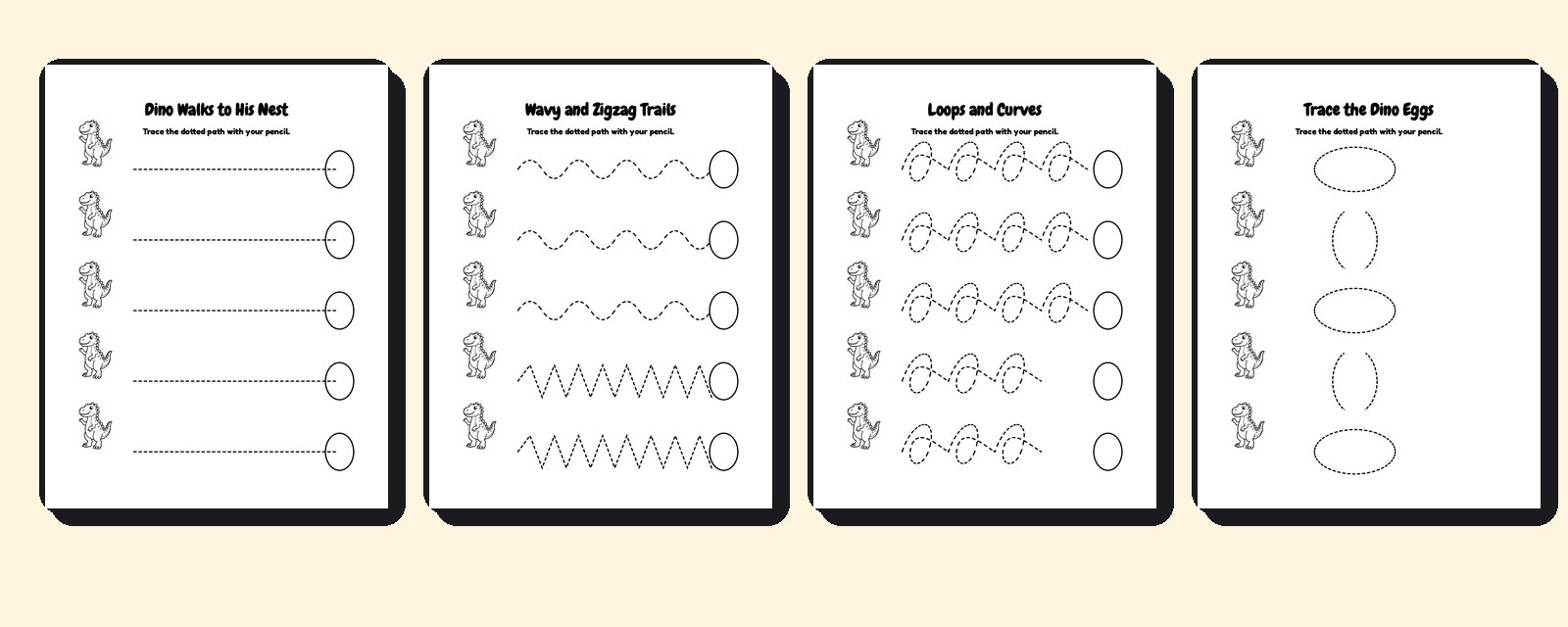
Warm-ups feel like a game, not a lesson. When your child walks Dino to his nest along a dashed line, they are practicing the same straight stroke that becomes the side of an L or a T.
Letter Tracing Pages
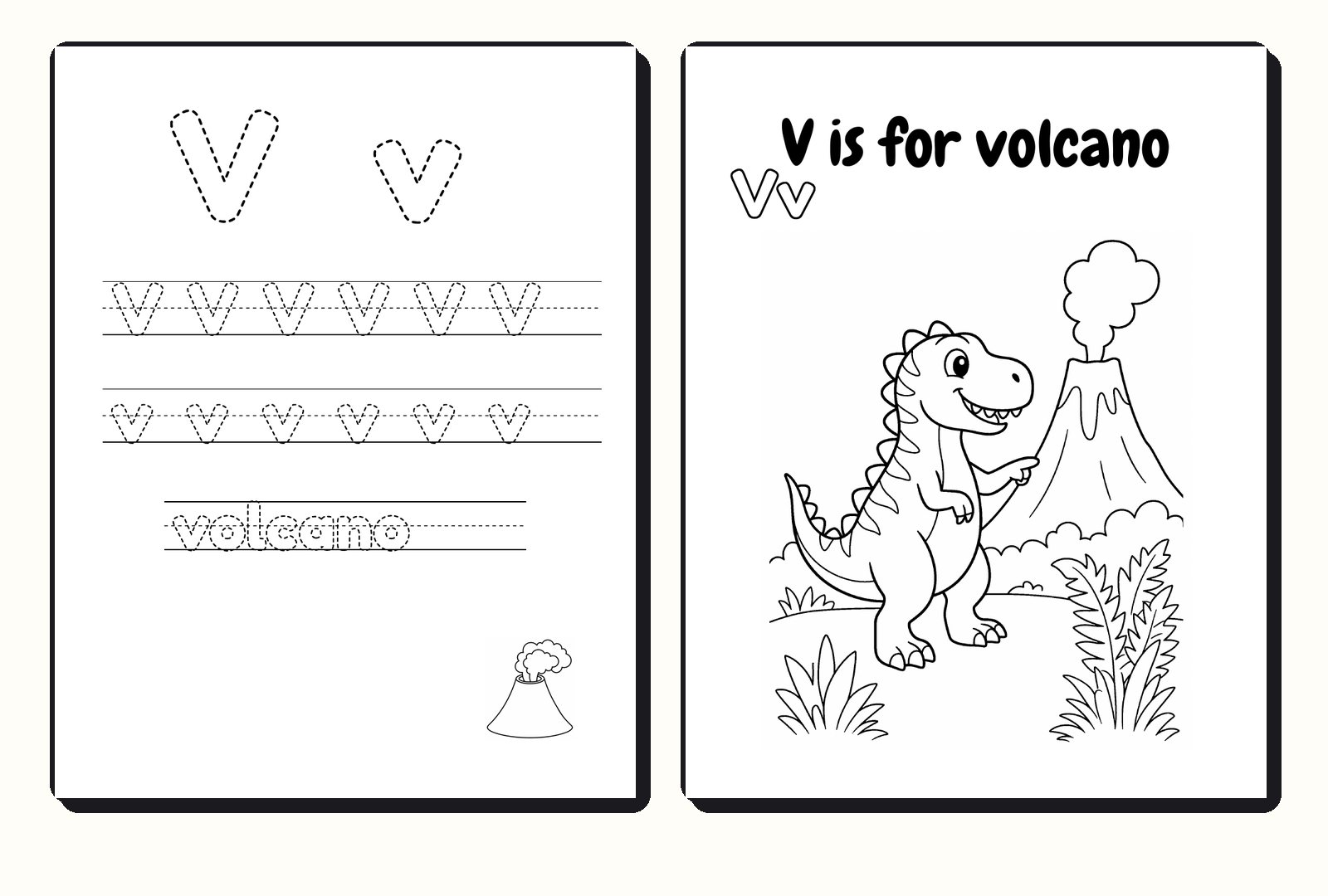
Letter pages are the heart of tracing practice. A good one shows a big uppercase and lowercase letter, then a row of each to trace, then a short word that starts with the letter.
A noticeable trend in 2026 is pairing each tracing page with a picture to color. The child traces K, then colors a kite, so the sound, the shape and the picture stick together.
The practical benefit is motivation. Many preschoolers will happily trace a row of letters when they know a picture of their favorite animal is waiting on the next page.
How to Choose the Right Alphabet Tracing Practice for Your Child’s Age
This is where parents often feel unsure. Pages that are too small or too busy end in tears; pages that are too easy get boring. This table is the quick answer.
| Age | Best kind of practice | Why it works | Best for |
|---|---|---|---|
| 3 | Pen control paths and big single letters | Builds grip and steady strokes before letter rows | First time with a pencil |
| 4 | Big letters plus one row of each | Enough repetition to remember the shape | Preschool and pre-K |
| 5 | Full letter rows plus a first word | Connects letters to reading | Kindergarten prep |
| Mixed ages | A trace and color book | Younger kids color, older kids trace and color | Siblings, homeschool, classrooms |
Expert tip: the most important thing to check is the size of the letters, not the number of pages. A big letter that fills the top of the page is far easier for a 3 or 4 year old to follow than small letters squeezed into rows, so start big and let the rows come later.
Is My Child Ready? Practical Tips
If you are not sure your preschooler is ready for alphabet tracing practice, try this.
- Ask your child to copy a straight line, a circle and a cross. If they can do the first two, they can start with warm-up paths.
- Keep sessions to 5 to 10 minutes and stop while it is still fun.
- Do one letter per day. Twenty-six letters at that pace takes about a month, with weekends off.
- Begin with letters from your child’s name. Kids are far more excited to trace the letters they already own.
If your child would rather color than trace for now, an ABC Alphabet Coloring Book is a gentle way to meet the letters first, and you can add tracing a few weeks later.
Uppercase vs. Lowercase: Understanding the Difference
Uppercase letters are made mostly of straight lines and big curves, so they are usually easier to trace first. Lowercase letters are smaller and include tricky shapes such as b, d, p and q that kids often mix up.
The best practice shows both side by side on every page. Your child traces the uppercase first for confidence, then the lowercase, and slowly learns that A and a are the same letter wearing different clothes.
Alphabet Tracing Practice for Every Setting
Where your child practices shapes how you use the pages.
- At home: one letter a day at the kitchen table, with the finished coloring page going straight onto the fridge.
- In homeschool: follow the alphabet in order, and use review pages at the halfway point and at the end to check what has stuck.
- In a preschool or VPK classroom: one letter a week works well with circle time, sound games and a tracing page to finish at the table.
Simple, Standard and Full Options
Think of alphabet tracing practice in three tiers.
- Simple: pen control paths and one big letter per page. Right for young 3 year olds and any child still building grip.
- Standard: a big letter, one row of uppercase and one of lowercase, and a picture. The sweet spot for most 4 year olds.
- Full: letter rows, a first word to trace, a picture to color and review pages. Worth it for 5 year olds getting ready for kindergarten.
Ways to Personalize the Practice
Personalizing practice is easier than ever in 2026, with printables, name tracing tools and character workbooks all easy to find.
- Add a belongs-to page: writing (or tracing) their own name on the first page makes the book feel like theirs.
- Pick a favorite character: a dinosaur, a pup or a fox your child loves turns practice into a visit with a friend.
- Match letters to their world: after K is for kite, find something at home that starts with K and say it together.
Why a Character Guide Makes Alphabet Tracing Practice Easier
Maybe you have tried tracing worksheets before and watched your child lose interest after two letters. That is normal. Plain rows of letters ask a lot of a 4 year old, and there is nothing on the page that feels like a reward. That is exactly what we set out to fix in Dino Stomps Through the ABCs.
What makes the difference:
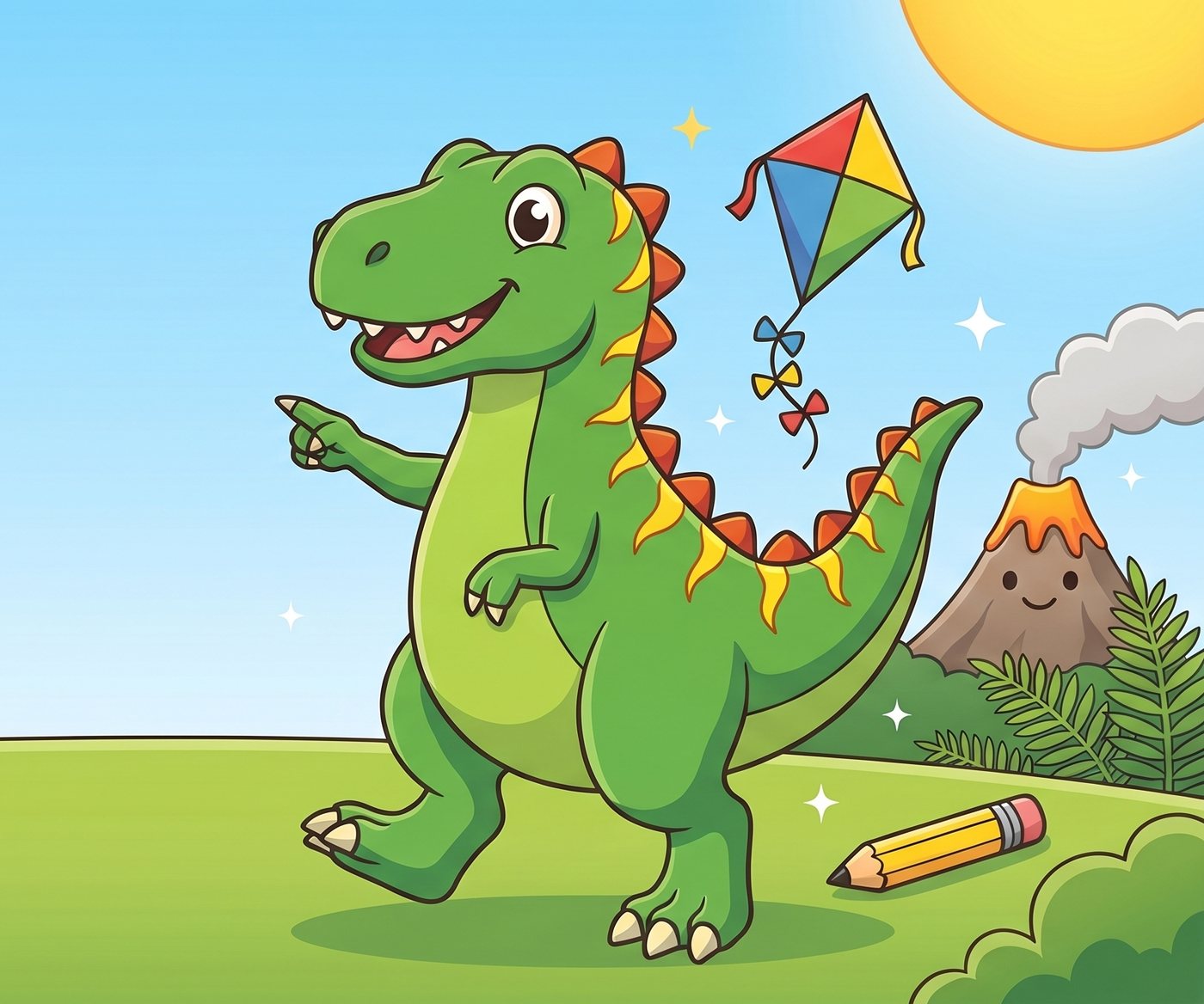
- A friend on every letter: Dino, our friendly T. rex, holds the apple, plays the drum and flies the kite, so every letter comes with a picture to color.
- Warm-ups before letters: four pen control pages (straight, wavy and zigzag, loops and curves, and dino eggs) come first, so little hands are ready.
- One letter, one spread: a tracing page with a big uppercase and lowercase letter, a row of each and a first word, followed by Dino’s picture for that letter.
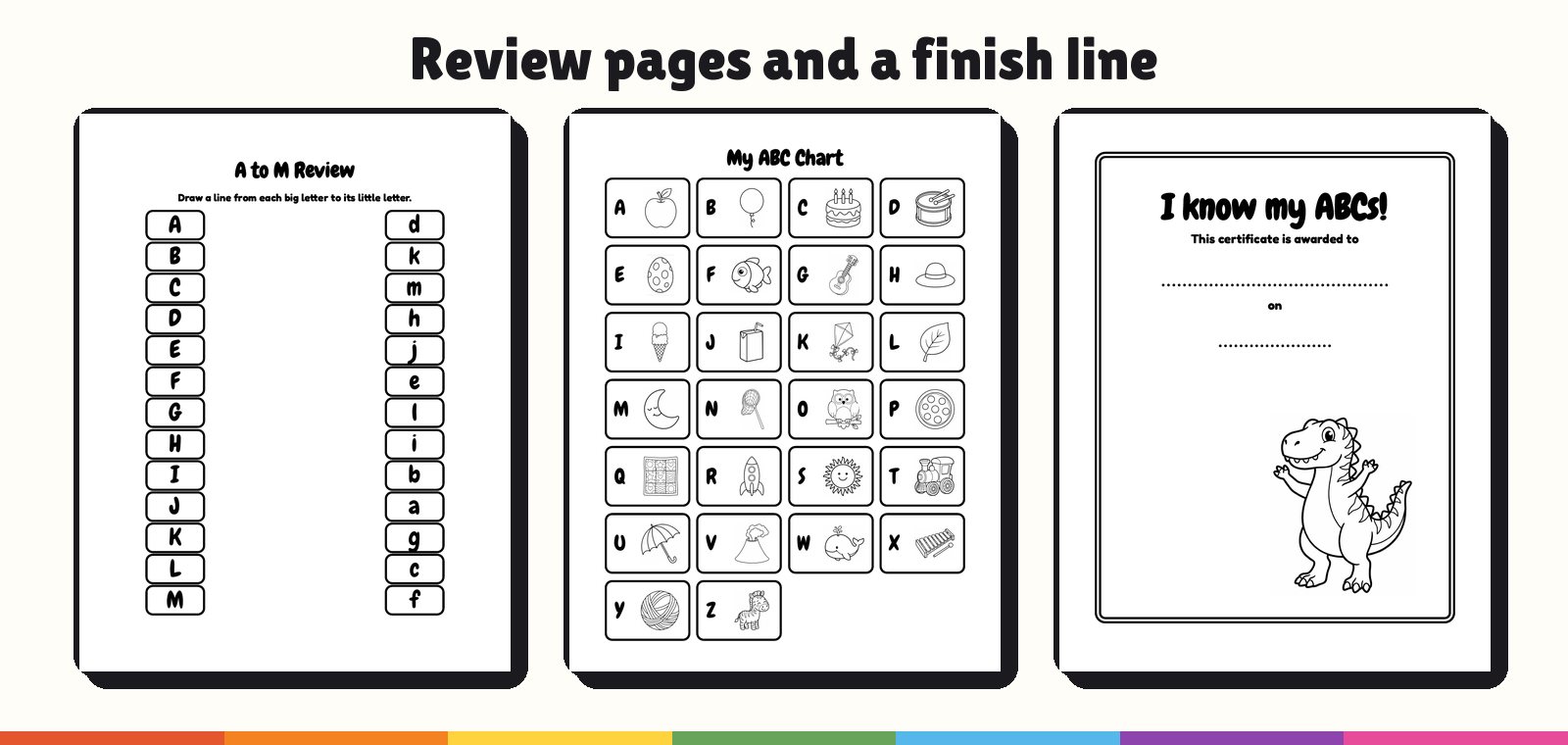
- Review and a finish line: an A to M review, an N to Z review, a My ABC Chart and an “I know my ABCs!” certificate to celebrate the end.
Getting the Most Out of Alphabet Tracing Practice
A few habits that help:
- Say the letter sound out loud while your child traces. “K, k, kite” links the shape to the sound.
- Trace first, color second. The coloring page is the reward, so it keeps the tracing going.
- Use the review pages as a game, not a test. Draw the matching lines together and cheer every match.
- Hang the ABC chart where your child can see it, and point to the letters you spot on signs and cereal boxes.
If your child is a dinosaur fan who wants more stomping fun after Z, Dino is also the cover star of Dinosaur Coloring Pages, a book full of friendly dinosaurs made just for coloring.
Frequently Asked Questions About Alphabet Tracing Practice
What age should kids start alphabet tracing practice?
Most kids are ready for alphabet tracing practice somewhere between ages 3 and 5, once they can hold a crayon with their fingers instead of a fist and copy a straight line or a circle. Start with pen control paths first, then move to big letters, and do not worry if one child starts at 3 and another at 4 and a half.
How do I make alphabet tracing practice a daily habit?
A simple routine makes all the difference.
- Pick one time of day, such as after breakfast or before a nap.
- Do one letter in 5 to 10 minutes.
- Finish with the coloring page as the reward.
- Keep finished pages in one folder so your child can see the stack grow.
Can my child use markers for alphabet tracing practice?
Use a pencil or a chunky crayon for the tracing itself, because markers make thick lines that hide the dashed guide. Markers are fine on a single printed sheet, but in a workbook printed on both sides of the paper, like ours, they can show through to the next page, so stick to pencils and crayons.
Conclusion
Learning letters does not have to mean worksheets and frustration. A few minutes a day, a friendly character and a picture waiting on the next page can turn the alphabet into something your child looks forward to, right up to the day they hold up a certificate and tell you, with a big grin, that they know their ABCs.
Dino Stomps Through the ABCs is available now on Amazon. It has 4 pen control warm-ups, a tracing page and a Dino picture to color for every letter from A to Z, two review pages, a My ABC Chart and a certificate, all on big 8.5 x 11 inch pages for ages 3 to 5.
Start with the letters in your child’s name, keep it short and cheerful, and let them set the pace. When you are ready for more, explore every Imagination Press book and find the next friend your child will want to learn with.